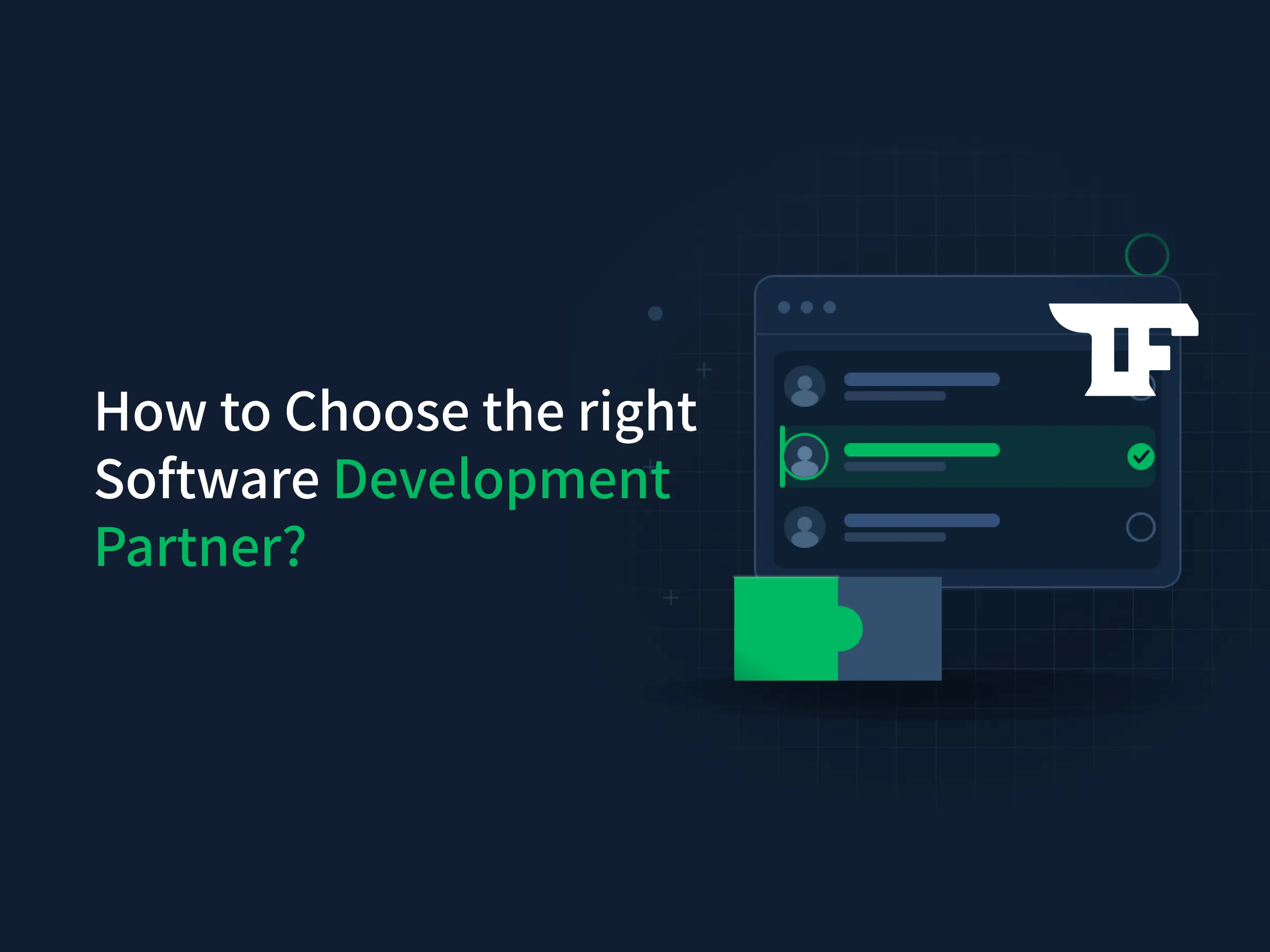
Choosing who builds your software is one of the highest-stakes decisions you'll make, because a botched build is expensive and slow to undo. The right partner has an in-house, multidisciplinary team, a transparent process that starts with discovery, relevant portfolio work, clear communication, and a model that holds them accountable for outcomes, not just billable hours. This guide walks through your options, the criteria that actually matter, and the exact questions to ask before you sign.
Why this choice matters more than the price
It's tempting to optimize for the lowest quote. But software is rarely a one-time transaction; you're choosing a team you'll work with for months, and often years, as the product grows. A cheaper partner who delivers a fragile, hard to maintain product costs far more over time than a stronger one who builds it right. Evaluate for the total relationship and the quality of what you'll own, not just the headline number.
Agency, freelancer, or offshore team — which is right?
There's no universally correct answer, only the right fit for your product and risk tolerance.
Freelancers suit small, well defined tasks and tight budgets. The tradeoff is capacity and continuity: a single person is a single point of failure, and they rarely cover strategy, design, and engineering together.
Offshore teams can lower your hourly rate significantly. The tradeoff is coordination overhead, time-zone friction, and more management burden on you, savings that can evaporate into rework and miscommunication if the product is complex.
A U.S.-based product firm carries a higher hourly rate but typically delivers a more cohesive product with far less management on your side, because strategy, design, and engineering sit on one accountable team.
For anything where the software is central to your business, and where getting it wrong is costly to redo — an in-house team that owns the whole product from strategy through engineering is usually the safest path to something that actually ships and scales.
The criteria that actually matter
When you compare partners, weigh these far more heavily than the quote alone.
A real process that starts with discovery. The best partners don't quote a full build from a paragraph. They define scope through a discovery process first, so the plan, timeline, and price are grounded in reality rather than optimism. Ask what their process produces before any code is written.
An in-house, multidisciplinary team. Strategy, design, and engineering working together, not a project manager coordinating a chain of subcontractors, means fewer handoffs, more cohesive products, and one team accountable for the result.
Pricing that protects you. Open ended hourly billing shifts overrun risk onto you. A partner who can offer a fixed price for a defined scope is signaling confidence in their estimating and their process. At minimum, they should be transparent about how they price and how they handle scope changes.
Relevant portfolio work. Look for products of similar complexity, ideally in or adjacent to your industry. Real case studies with outcomes beat a wall of logos.
Clear communication. You should understand what they're saying without a translator. A partner who can explain technical tradeoffs to a non-technical founder is one who'll keep you informed throughout.
Ownership and post-launch support. Confirm you own the code and IP outright, and ask how they handle the product after launch, maintenance, monitoring, app store management, and ongoing improvements. A partner who disappears at launch leaves you stranded; one with ongoing support or membership plans stays accountable as the product lives and grows.
Questions to ask before you hire
Bring these to any partner conversation:
- What does your discovery or scoping process produce before development starts?
- Is your team in-house, and does it cover strategy, design, and engineering?
- Do you offer a fixed price, and how do you handle changes to scope?
- Can you show case studies similar to what I'm building, with outcomes?
- Who owns the code and intellectual property when we're done?
- What happens after launch — how do maintenance, support, and updates work?
- Who, specifically, will I be working with, and how will we communicate?
The answers will separate partners who own outcomes from vendors who just bill hours.
Red flags to watch for
- A full-build quote with no discovery or scoping; a number pulled from thin air.
- Vague answers about who actually does the work, or heavy reliance on undisclosed subcontractors.
- Reluctance to put IP ownership in writing.
- No clear plan for what happens after launch.
- Communication that's confusing or slow during the sales process; it rarely improves once you've signed.
Looking for a partner who owns the outcome? Iron Forge is a U.S. based, in house team that takes products from discovery and a fixed development price through design, build, and ongoing support. See our case studies or book a strategy call to talk through your project.
Written by Jeremy Millian the COO at Iron Forge Development, a U.S. based software commercialization firm that has helped launch 100+ products from idea to market.